


Nature’s Blessings, Divine Guidance, and Timeless Wellness
By Dietitian Nausheen Qadri
As temperatures rise during the intense summer months, modern nutritionists often recommend hydration-rich fruits, natural minerals, and light foods to protect the body from exhaustion and dehydration. Remarkably, many of these very foods were mentioned in the Holy Qur’an over fourteen centuries ago as signs of divine mercy, nourishment, and reflection.
The Qur’an does not merely present fruits as dietary items; it portrays them as symbols of gratitude, healing, abundance, and spiritual consciousness. Dates, grapes, olives, figs, pomegranates, and bananas are repeatedly referenced in the Qur’anic worldview as blessings created for human benefit. Today, nutritional science increasingly confirms their immense value for physical health, particularly in hot climates and summer conditions.
The Qur’anic Vision of Food and Well-Being
The Qur’an repeatedly invites human beings to observe nature and appreciate the provisions bestowed upon them:
“Then let mankind look at his food.”
— Surah ‘Abasa (80:24)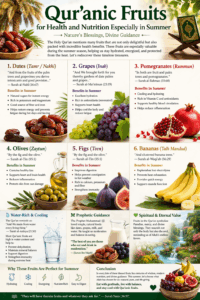
This verse is both spiritual and scientific. It encourages thoughtful eating, reflection on natural nourishment, and awareness of how food sustains life. In contrast to highly processed modern diets, Qur’anic nutrition emphasizes simplicity, balance, moderation, and gratitude.
Dates: Energy and Strength in Extreme Heat
Among the most frequently mentioned fruits in the Qur’an are dates (tamr), produced by the blessed date palm (nakhl). Allah says:
“And from the fruits of palm trees and grapevines you derive wholesome provision.”
— Surah al-Nahl (16:67)
Dates are rich in:
- Natural glucose and fructose
- Potassium and magnesium
- Iron and dietary fiber
- Antioxidants and essential minerals
In summer, dates help replenish energy lost through heat and fatigue. Their natural sugars provide immediate nourishment without the harmful effects of refined sweeteners. They also support hydration when consumed with water or milk, following Prophetic tradition.
The date palm itself symbolizes resilience, life, and divine blessing throughout Islamic civilization.
Grapes: Hydration and Heart Health
The Qur’an repeatedly mentions grapes (inab) among the gardens created by Allah:
“We brought forth for you gardens of date palms and grapes.”
— Surah al-Mu’minun (23:19)
Grapes contain high water content and powerful antioxidants such as resveratrol, known for supporting cardiovascular health. During hot weather, grapes:
- Help cool the body
- Reduce dehydration
- Support blood circulation
- Provide natural vitamins and minerals
Both fresh grapes and raisins have long been valued in traditional Islamic medicine and Mediterranean diets.
Pomegranates: Cooling and Healing
The pomegranate (rumman) is described in the Qur’an as one of the fruits of Paradise:
“In both are fruit and palm trees and pomegranates.”
— Surah al-Rahman (55:68)
Modern nutritional research recognizes pomegranates for:
- Anti-inflammatory properties
- Vitamin C and antioxidants
- Support for healthy blood flow
- Immune system strengthening
In hot climates, pomegranate juice serves as a refreshing and cooling drink that helps restore vitality.
Olives: The Blessed Tree
One of the most spiritually significant fruits in the Qur’an is the olive (zaytun):
“By the fig and the olive.”
— Surah al-Tin (95:1)
The olive tree is also described elsewhere in the Qur’an as a “blessed tree.” Olive oil remains central to both Prophetic medicine and modern nutritional science due to its:
- Healthy monounsaturated fats
- Anti-inflammatory benefits
- Heart-protective qualities
- Skin-protective effects against heat and dryness
The Mediterranean diet, widely praised today for longevity and health, is deeply rooted in olive consumption.
Figs: Gentle Nutrition and Digestive Health
Figs (teen) are honored alongside olives in Surah al-Tin. They are among the oldest cultivated fruits known to humanity.
Fresh figs are especially beneficial in summer because they:
- Aid digestion
- Prevent constipation caused by dehydration
- Supply calcium and potassium
- Strengthen immunity
Their soft texture and cooling nature make them ideal for hot weather and light summer diets.
Bananas: Electrolytes and Recovery
Classical Qur’anic commentators interpret talh mandud in Surah al-Waqi‘ah as clustered banana trees:
“And clustered banana trees.”
— Surah al-Waqi‘ah (56:29)
Bananas are highly effective for restoring electrolytes lost through sweating. They:
- Prevent muscle fatigue
- Provide quick energy
- Support hydration balance
- Reduce heat exhaustion
This makes them especially valuable during fasting and extreme summer heat.
Water: The Foundation of Life
The Qur’an reminds humanity:
“And We made from water every living thing.”
— Surah al-Anbiya (21:30)
Most Qur’anic fruits possess high water content and naturally help the body:
- Maintain hydration
- Balance minerals
- Improve digestion
- Protect against heat-related weakness
This reflects a remarkable harmony between divine revelation and modern nutritional understanding.
Prophetic Simplicity and Moderation
The dietary habits of the Prophet Muhammad ﷺ emphasized moderation, natural foods, and mindful eating. His meals often included dates, milk, water, vinegar, grapes, and olive oil.
The Prophetic approach to food was never based on excess or luxury, but on:
- Balance
- Gratitude
- Health
- Spiritual mindfulness
This philosophy is increasingly relevant today, as modern societies struggle with lifestyle diseases caused by processed foods and unhealthy consumption patterns.
Fruits as Symbols of Paradise
Beyond their nutritional value, fruits in the Qur’an symbolize spiritual beauty and eternal reward. The gardens of Paradise are repeatedly described with flowing rivers and abundant fruits available without hardship or suffering.
Thus, Qur’anic fruits nourish both body and soul. They remind believers that divine blessings exist not only in acts of worship, but also in the natural foods Allah has created for human well-being.
Conclusion
In an era dominated by artificial diets and chemical-laden foods, the Qur’an’s emphasis on natural fruits offers timeless wisdom. Dates, grapes, olives, pomegranates, figs, and bananas are not merely delicious foods; they are signs (ayat) of divine mercy and care.
Especially during summer, these fruits help maintain hydration, strength, immunity, and inner balance. Their enduring relevance demonstrates the profound harmony between faith, nature, and human health.
By returning to the simplicity of Qur’anic nutrition and Prophetic moderation, humanity can rediscover a healthier and more spiritually conscious relationship with food — one rooted in gratitude, balance, and respect for the blessings of creation.
Nausheen Qadri is a Delhi-based Dietitian