



New Delhi: 24th March
A sweeping visual tribute to over a century of cinema is drawing attention at the International Film Festival of Delhi (IFFD), where the Tuli Research Centre for India Studies (T.R.I.S.) has unveiled a landmark exhibition bringing together some of the most iconic figures, films and artistic traditions from Indian and global film history.
Curated by noted archivist and author Neville Tuli, the exhibition presents a rare confluence of cinematic legends—from early pioneers to contemporary superstars—alongside vintage posters, memorabilia and archival material that trace the evolution of the medium.
At the heart of the showcase is a celebration of India’s enduring screen icons, spanning generations from Dev Anand, Raj Kapoor and Dilip Kumar to present-day stars such as Shah Rukh Khan, Salman Khan and Aamir Khan. The exhibition also highlights parallel cinematic movements led by auteurs like Satyajit Ray, Ritwik Ghatak and Mrinal Sen.
One of the major attractions is a section titled “The Golden Age of Hollywood (1910–1960s),” which situates Indian cinema within a broader global context, exploring the rise of film as a powerful storytelling and cultural force. Another segment, “Highlights of Indian Cinematography (1913–1973),” pays tribute to pioneering cinematographers whose technical and artistic innovations shaped the visual language of Indian films.
The exhibition also revisits unique elements of cinematic culture, including song-synopsis booklets that once served as both narrative guides and promotional tools, underscoring the integral role of music in Indian storytelling traditions.
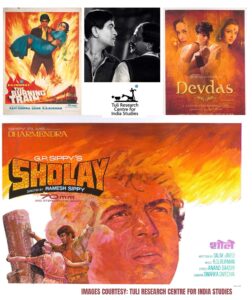
A striking display of original film art and publicity material features classics such as Sholay, Guide, Pakeezah and Deewaar, reflecting how cinema once dominated urban visual culture through hand-painted posters and large-scale hoardings.
Among the highlights is a dedicated tribute to Mughal-e-Azam, widely regarded as one of Indian cinema’s most monumental productions, as well as a rare photographic archive offering an intimate look at the working life of Satyajit Ray through the lens of photographer Nemai Ghosh.
The exhibition further honours prominent personalities such as Dharmendra, Sharmila Tagore and filmmaker Shakti Samanta, presenting deeper insights into their contributions to Indian cinema.
Organisers say the initiative goes beyond nostalgia, positioning cinema as a vital educational resource. Through its extensive archive of posters, photographs, booklets and memorabilia, T.R.I.S. aims to integrate visual culture into academic discourse and promote interdisciplinary learning.
“Cinema has always been far more than the films we watch,” Tuli said, emphasising the importance of preserving and studying the visual and material history of the medium.
With its blend of scholarship, archival depth and visual spectacle, the exhibition offers audiences and researchers alike a rare opportunity to engage with cinema not just as entertainment, but as a significant cultural and intellectual tradition.