


Click Tv
The role of the ‘small’ actors as leaders has been critical in lowering confrontations between the great powers in the Arctic. This has allowed the discussion in the Arctic Council to be very regional — and issue based.
In the afternoon before the inauguration of the annual Arctic Frontiers conference in Tromso, Norway, the mayor of the city hosted an Arctic Mayors Forum, bringing together mayors from Arctic cities in Norway, Denmark, Canada, Sweden, Iceland, and the United States. Despite the absence of Finland and Russia — the other two Arctic countries — this was a stunning development. It would be the equivalent of the mayors of Peshawar, Kathmandu, Srinagar, Lhasa, Gangtok, Thimphu, and Kabul sitting down together to discuss the issues their various mountain communities face.
There are significant similarities between the two regions. Both the Arctic and the Hindu Kush Himalayan (HKH) region are deeply impacted by climate change. Both the regions are surrounded by eight countries, some of them very powerful, and not kindly inclined to each other. Both regions are seeing the impact of China as an actor much more engaged in the system. While the impact of China in the Himalayan region as it invested heavily into the infrastructure of western Chinese areas, especially in the Tibetan plateau and in the regions abutted by Central Asian nations, is well known, comparatively little discussion has taken place on China’s White Paper on the Arctic, and the “Polar Belt and Road.”
Both the Arctic and the Hindu Kush Himalayan region are deeply impacted by climate change. Both the regions are surrounded by eight countries, some of them very powerful, and not kindly inclined to each other. Both regions are seeing the impact of China as an actor much more engaged in the system.
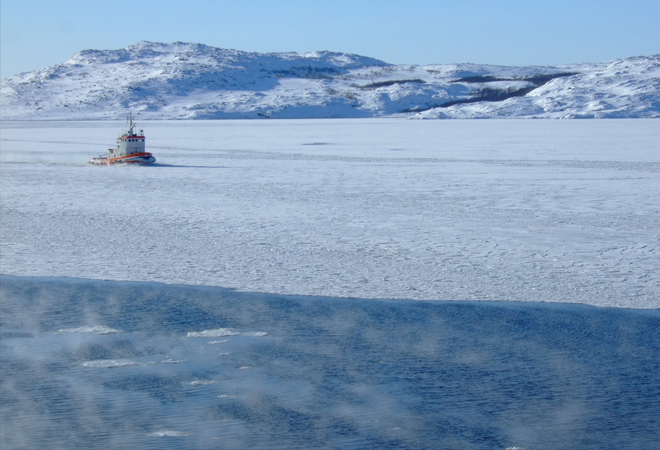
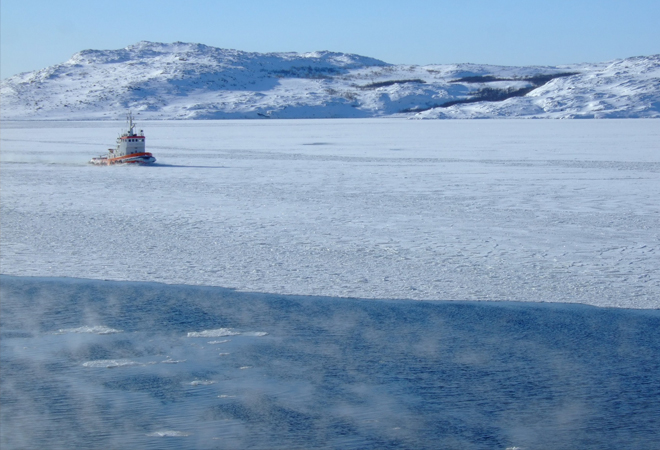
The melting ice in the Arctic is driving new interests in shipping in exploration for oil and mineral, and it will have a major impact on fishing — including the cod stock jointly managed by Russia and Norway, the largest sustainable fishing stock in the world. Two years ago, groups of whales appeared off Tromso, following herring. Now they have moved further north, as the warming sea drives the herring northward.
If anything, the challenges in the HKH are even more extreme. The glaciers in the region, the largest accumulation of ice in the world after the North and South Poles, are melting faster than in the plains. They feed the transboundary rivers of the Indus, Ganga, Brahmaputra, and Mekong basins — as well as the Chinese rivers, the Yellow and Yangtze.
Their future will have a direct impact on the lives of nearly 2 billion people, as well as change the calculations on which hydropower and agricultural dams are being built in all the eight countries — Afghanistan, Pakistan, India, China, Nepal, Bhutan, Bangladesh and Myanmar — bordering the HKH region. The Himalayas are also one of the youngest and most fragile mountains in the world, and the floods and droughts, a consequence of a warming climate, are increasing risks for the lives and livelihoods of all that live the region.
As with the Arctic, the municipalities of the HKH region are the most affected, as well as the first responders to the crisis, and yet the possibility of mayors from across the mountains meeting seems remote compared to that of the Arctic. One of the reasons is that there is international institution under which mayors from the HKH region could meet, and which they could interact with, like the Arctic Council, which has multi-level representation by all eight countries in the Arctic. But the success of the Arctic Council is premised on some very simple ideas that can be replicated in the HKH region.
The formation of the Arctic Council rests on two inter-related pillars: a research-based focus on the environment, and the explicit exclusion of security policy issues from the agenda.
First and foremost, the formation of the Arctic Council rests on two inter-related pillars: a research-based focus on the environment, and the explicit exclusion of security policy issues from the agenda. Attendant to this, the Arctic Council is not a de jure governance body, as in it works only by consensus and does not have the power to force any of its members to do anything, or sanction them in any manner. This has narrowed down the issues that the Council initially focussed on, and allowed it to build the trust upon which its de facto governance power rests.
The other aspect is the United Nations Convention on the Law of the Sea (UNCLOS), which all parties respect. The United States, the most powerful actor in the Council, has not ratified the Treaty, but it still acts according to its provisions. Similarly the Chinese White Paper on the Arctic explicitly states its wish to abide by UNCLOS. Given the complicated issues in the South China Sea, and Chinese dismissal of the Law of the Sea in that regard, this is a powerful commentary on how two major states — the US and China — who tend to dismiss ‘inconvenient’ international treaties, not to mention Russia, which has recently challenged international norms, can be brought together within the ambit of such a governing coalition.
Part of the answer seems to be in keeping ambitions low, and having a discourse led by non-great power states. Most of the Arctic states are part of NATO, but it also includes Russia. The role of Norway, one of the key small states very active in Arctic matters illustrates this point. Norway’s security is undergirded by the US military, but it has jointly managed the world’s largest cod stock with Russia, even when the Cold War was still on, and Russia was the major actor in the Soviet Union. History has a longer role, with Norwegians in the north aware of the fact that the first rollback of Nazi power happened when the Soviets removed the Nazi-affiliated Nasjonal Samling party, and then retreated back to its borders on orders from the Kremlin. Small towns in the north, often dominated by the Sami indigenous people, have been trading across borders for centuries, similar to some indigenous communities in the Himalayan states until the hardening of borders in the modern era.
History has a longer role, with Norwegians in the north aware of the fact that the first rollback of Nazi power happened when the Soviets removed the Nazi-affiliated Nasjonal Samling party, and then retreated back to its borders on orders from the Kremlin.
The role of the ‘small’ actors as leaders has been critical in lowering confrontations between the great powers in the Arctic. This has allowed the discussion in the Arctic Council to be very regional, and issue based, rather than getting bogged down in great power rivalry. The representation from indigenous peoples formally in the charter at all levels of the organisation, from the ministerial, to the ambassadorial, to the expert groups also helps, as it puts the communities most affected front and centre in most discussions. This is very different from the HKH region. A senior Chinese commentator said, “If we initiate anything it will be looked at with suspicion.” This is equally true of Indian initiatives in South Asia, or even of Pakistan.
The other aspect is an “extreme discipline” in keeping security related high politics divorced from the proceedings of the Council. Much of this is predicated on the understanding that Arctic is one zone, a sea surrounded by land, and what happens in one area will very quickly affect the rest.
Can this type of model be replicated in the HKH region? There is a faint possibility. The Hindu Kush Himalayan Monitoring and Assessment Programme, coordinated by the Kathmandu-based International Centre for Integrated Mountain Development, released its report on 4 February 2019. This is the most comprehensive report on climate change and the fulfilment of the Sustainable Development Goals ever attempted of the HKH region. Critically the report came about through requests from the governments of the region, all of whom have formal, government-level representation at ICIMOD. As the data from the report becomes part of the development strategies of the various countries, we will see whether the Himalayan countries can replicate the success of the Arctic Council.
Source: https://www.orfonline.org/expert-speak/can-arctic-council-success-replicated-south-asia/