



Click Tv
A Turkish lawmaker, Öztürk Yılmaz, has proposed that the Muslims in Turkey be called to prayer in Turkish, and not Arabic. His Republican People’s Party threw him out for the demand, though when the party, which now leads the Opposition, was in power, the azaan was in Turkish.
Not just azaan, even namaz was offered in Turkish during 1932-1950. But the Arab colonisation of Muslim minds was so comprehensive that it was a very unpopular decision, and was rolled back when the party lost the election in 1950.
The first time prayers were said in Turkish in an Istanbul mosque was on 19 March, 1926 — the first Friday of Ramzan that year. Cemaleddin Efendi, who was leading the prayer, noticed that most of the people left without completing their prayers.
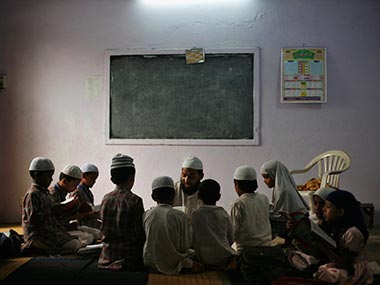
Representational image. Reuters
The issue of prayers in local languages came up the moment Islam crossed the Arabian Peninsula into the Sasanian Empire. In the second half of the seventh century CE, Islam was spreading in what is today Iran and the proud Persians asked for prayers in their language.
Language barrier
This was fair and in consonance with instructions in the Quran that prayers be said in the language people understood. The Quran says god’s messengers went to different parts of the world, conveying His message in local languages. God showed no preference for Arab hegemony. Jurists, too, weighed in. Imam Mālik ibn Anas, Imam Muhammad al-Shāfi’ī, and Imam Ahmad ibn Hanbal, all Arab jurists, opposed the idea.
A senior jurist of Persian origin, Imam Abu Hanifa, the founder of Hanafi jurisprudence, favoured the change but several of his followers didn’t agree with him.
Officially adopted by the Ottoman Turks in the 16th century, the Hanafi School is followed by many in West Asia, South Asia and the Far East. And yet, the idea of prayers in local languages has not taken off.
The push for languages arose from two sources: a pride in local culture and a desire to have a closer connection to god.
Not only god in the Quran, even Prophet Mohammad in his final sermon made clear that the Arabs don’t have superiority over others.
But the Arabs, who used Arabic to further imperialistic ambitions, have not only sought to impose the language but also their dress code, architecture and other cultural identity-markers. The result is that some of the respected clerics in India feel honoured to call themselves slaves (ghulam) and even dogs (kalb) of Arab spiritual masters.
Talk to me
Does this mean that Islam does not have a regional colour? No. Indian Islam has features that the Arabs would not be able to identify with. For instance, our caste-system, the practice of dowry and married women wearing sindoor and bindi. But clerics have made every effort to obscure the syncretism of Indian Islam.
The word used for worship in the translation of the Quran by Shah Rafiuddin is pūjnā, associated with the Hindu ritual. In the 18th century, both the indigenous pūjā and the Arabic ibādā were permissible substitutes. It was only a century later, when the boundaries of Muslim identity began to tighten, that the Arabic word became mandatory.
The world’s largest movement for preaching Islamic uniformity and exclusivism, Tablighi Jamaat, was started by Deobandi scholar Maulana Ilyas Kandhlawi in 1927 after he noticed that Muslims in Mewat continued to be well integrated with their original Hindu culture.
Tablighi efforts have been aided by an injection of Saudi petrodollars. The familiar Muslim greeting of Khuda Hafiz is now Allah Hafiz. It is no longer unusual to see a Muslim woman in a hijab or a man dressed in an abaya or sporting a keffiyeh. It’s all right in West Asia, where these clothes protect from sun, dust and sandstorms, but in Kolkata, Jakarta, London, Paris or Boston? It is nothing but a sign of a colonised Muslim mind.
Transition to local languages has not been easy for other religions too. A certain holiness does attach itself to some languages. Vedic Sanskrit, for instance, is sacred for Hindus, Hebrew for Jews. Christianity’s struggle to retain the Bible in Latin and Greek was intense and bloody, with a powerful Church putting up a stiff resistance. Eventually, the Bible did speak to the people in their language.
The Ulema in India refuse to accept as Quran an Urdu or English translation of the holy book. Mosques, too, do not display translated copies of the Quran, but in Europe and the US they do. In fact, much of Islamic literature is now easily available in translation on the Net.
In South Asia, there has never been a call for azaan or namaz in local languages. How can Muslims come close to Allah if they don’t understand the language they are praying in? Maybe the debate in Turkey will open our hearts and minds.
(Sultan Shahin is the founder-editor of a Delhi-based progressive Islamic website, NewAgeIslam.com)
Source: https://www.firstpost.com/india/time-may-have-come-for-islam-to-go-local-6048201.html